Every empire began as an email that someone almost didn’t answer.
Venturebound is a strategy game about one founder's whole career. You raise the money, put a plant in the ground and take it across the world. You might lose a company along the way. The career keeps going. And like every company that ever made it, this one starts in an inbox.

The money lasts about a year. The one investor who can lead hasn't written back.
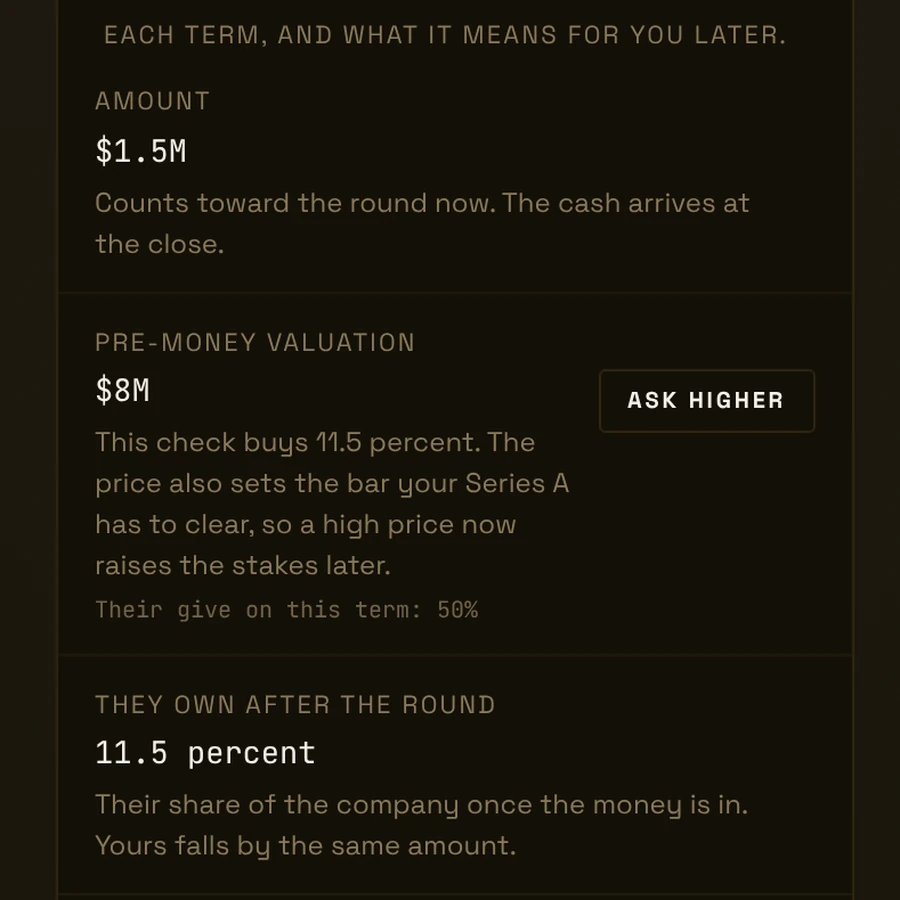
Most of the people you pitch will go quiet. The one who stays will want a seat on your board in exchange for the check. You won't know for years whether that was the best deal you ever signed or the worst. You sign it anyway, because the balance is smaller every time you look.

The cheap parcel is cheap for a reason. You buy it anyway.
You pick the city, then the ground. The river that makes the land cheap is the same river that floods it, and the town across the water hasn't made up its mind about you. Permits take months. The power company takes longer. You decide how big to build and how hard to run it, then you wait. One morning the thing you pitched is standing in the ground, making something.

It works. Now it has to work everywhere.
A new country means new wages, new officials and a long wait for the first permit. Go in alone, take a local partner who keeps a slice of every sale, or buy a firm that already knows the town. Every way in costs something. You hand a floor to someone you trust and find out how they run it when you're not in the room. Your routes cross oceans now, and the rivals who used to ignore you start keeping score.

You built a company the size of the world. Now the world gets a vote.
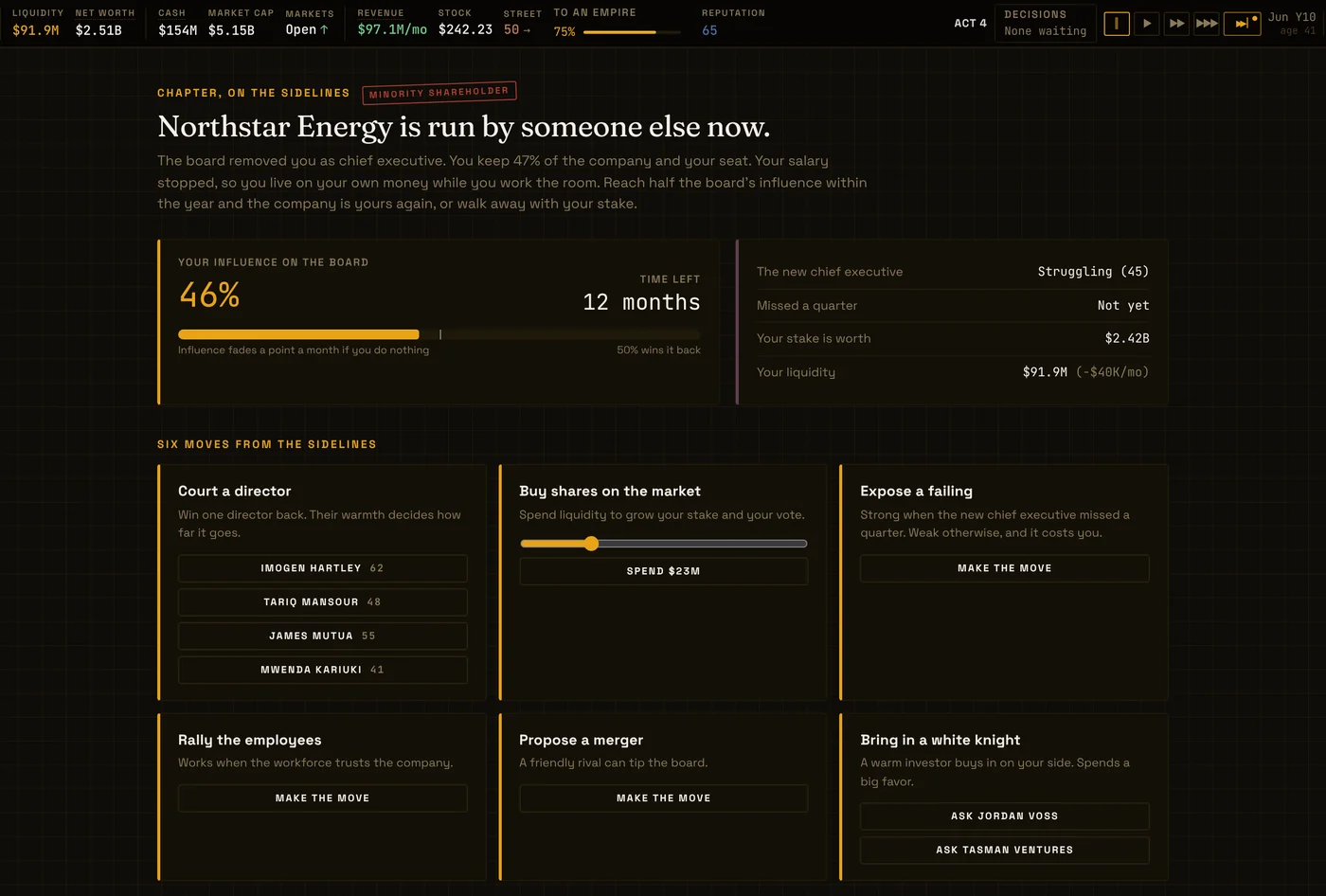
Executives run the floors you used to walk. You buy companies, face down activists and fend off the ones who want to buy you, while a board you built seat by seat weighs every move you make. Every director in that room owes you something. Not every director remembers it. One quarter goes wrong, then another, and the room goes quiet when you walk in.

The seat you gave away at the beginning has come back for your chair.
You've got ninety days to win half the board back. Rally the investors who still believe in you. Make your case in public. Work the directors one by one. Lose anyway, and you keep your shares, your seat and a year to take it back. Or take your stake and walk out the door. What comes next is yours to decide.
The promises you make early come due late.
The world keeps a long memory. The clause you signed to close your first round, the jobs you promised a town, the supplier you squeezed because you could: they all come back around. Sometimes it's a favor. Sometimes it's a bill. However you play it, nothing you did in the first hour is forgotten by the last.
- 30The round closes, and your lead takes a seat
- 33Your first plant opens
- 38You cross your first border
- 46You take it public
- 52The vote goes against you
- 55You win it back
- 65+You decide how it ends
The ending is yours to choose. The board starts asking in your mid sixties, and somewhere around seventy-five it stops asking. You can hand the company to the successor you spent years getting ready, sell it and feel the weight come off your shoulders, or step back to the chair and watch someone else walk the floors you used to run.
Then the story goes on without you. The company keeps going after you leave the building, and what you built gets judged by what it becomes once you’re gone. Everyone who makes it to that day has won. The only question is what kind of win it was.
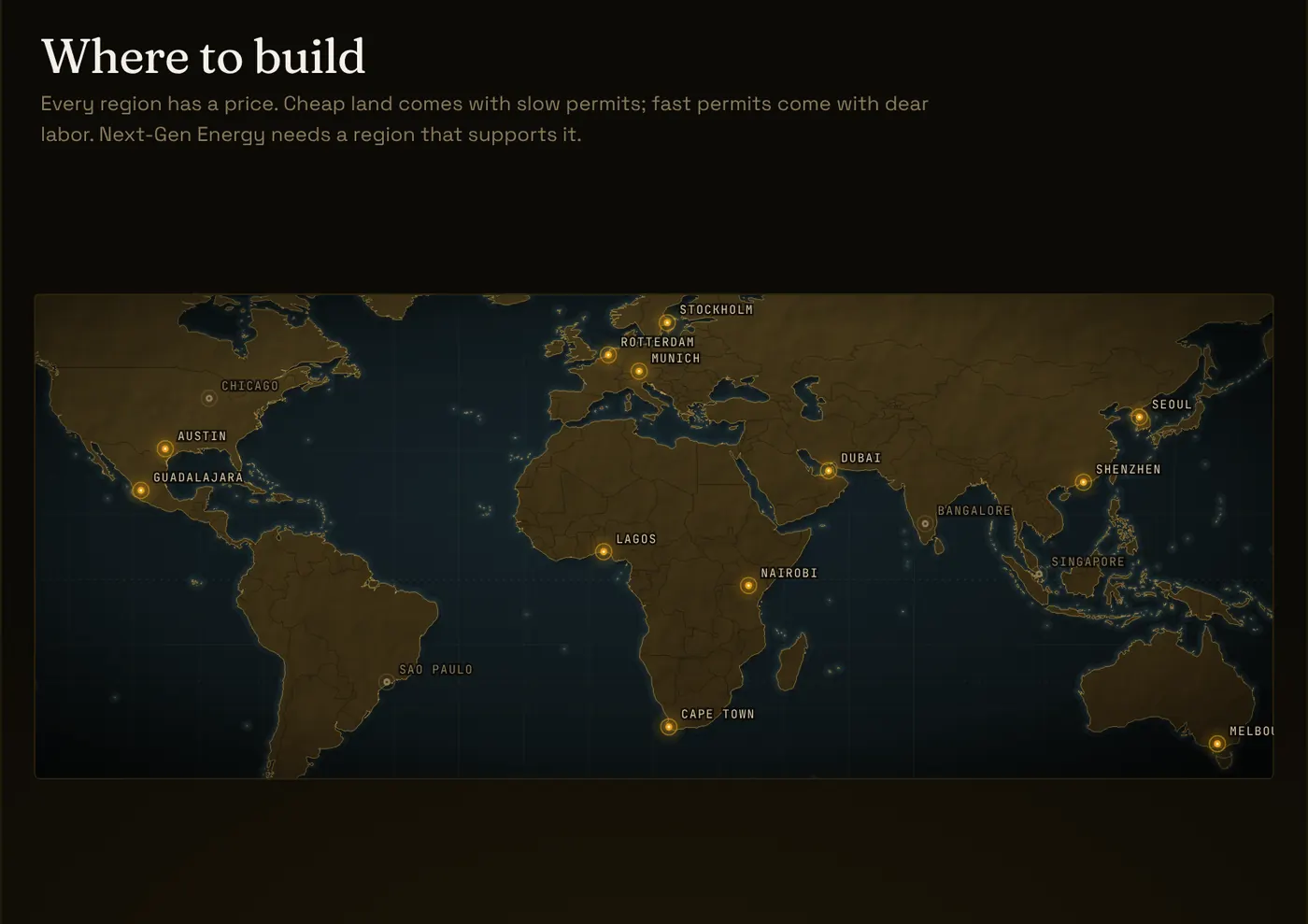
The map is full of places that haven’t heard of you yet.
Your first plant is only the first town that took a chance on you. Past it the map keeps going, to Austin and Dubai, Lagos and Seoul, Rotterdam and São Paulo, and every one has its own land, its own wages, its own officials and its own idea of what you owe it. Plant your flag, and the town learns your name.
Deep enough to run a company. Clear enough to play tonight.
Term sheets clause by clause. Plants that grow when you say so. Board votes seat by seat. When the game needs you, it puts the decision front and center, stakes and all.
Losing the company isn’t the end of your story. It’s the middle.
When it's gone, you're still standing in the world you built. Your reputation comes with you, and so do the people who remember what you did and what you didn't. Someone else sits in your old chair now. The desk is still there, though, and everyone who matters knows your name. What it means next is up to you.
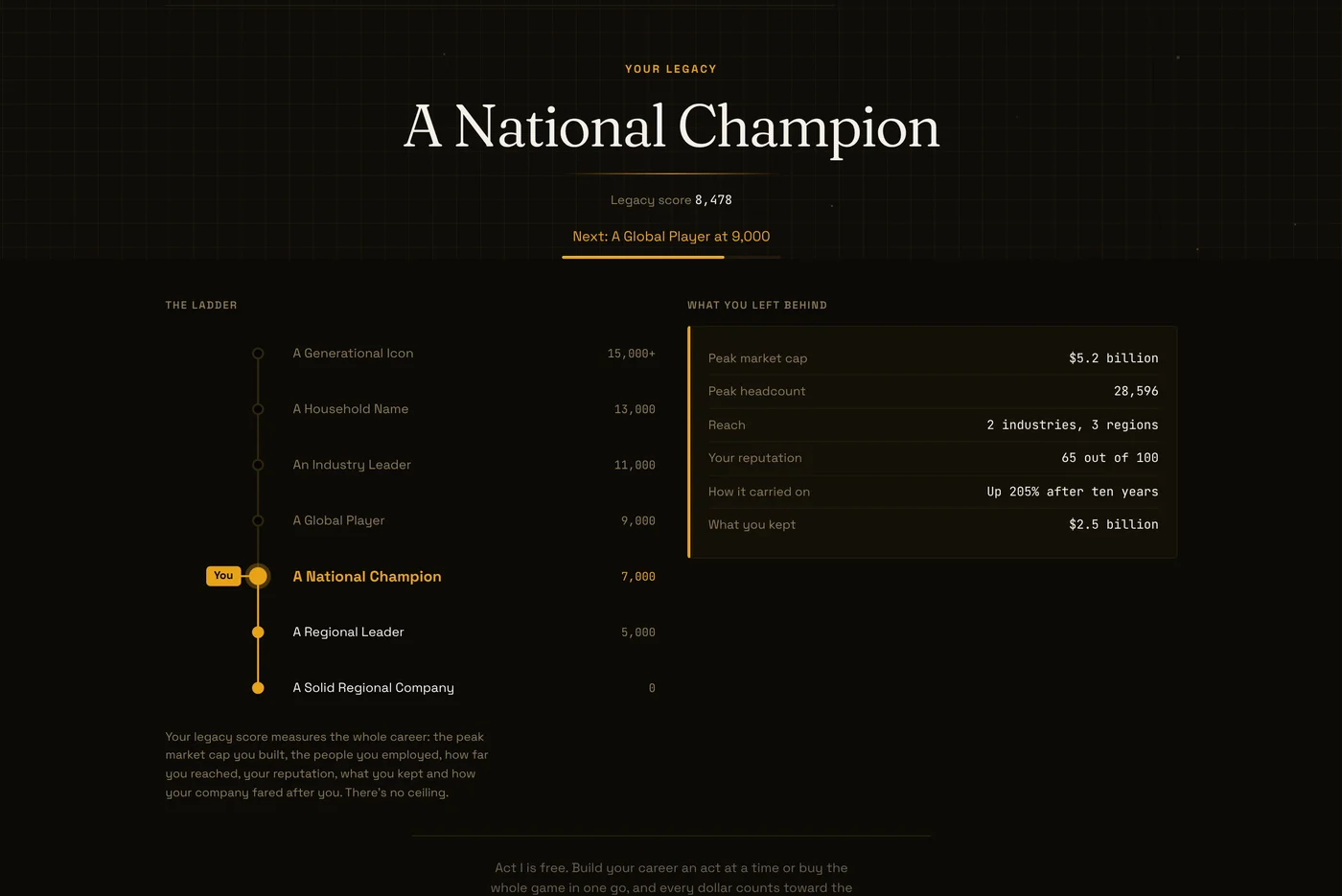
What you leave behind is a company that no longer needs you.
At the end there's no last enemy, only the question you've been answering since the first email: what kind of company did you build, and what kind of person did building it make you? The people it employed, the places it reached, the name it kept and the way it carried on without you are what a career is finally measured by. They stay on the record long after you've left the room, and they're the part nobody can take from you.